Welcome To Zhengzhou Livi Machinery Manufacturing Co., Ltd
E-mail:poultry@livichickencage.com


| Destination | Ghana |
|---|---|
| Bird type | Commercial laying hens |
| Cage system | A-type layer cages |
| Cage configuration | Four tiers, 160 birds per set |
| Cage quantity | 135 sets |
| Total cage capacity | 21,600 layers |
| Feeding equipment | Automatic feeding machine |
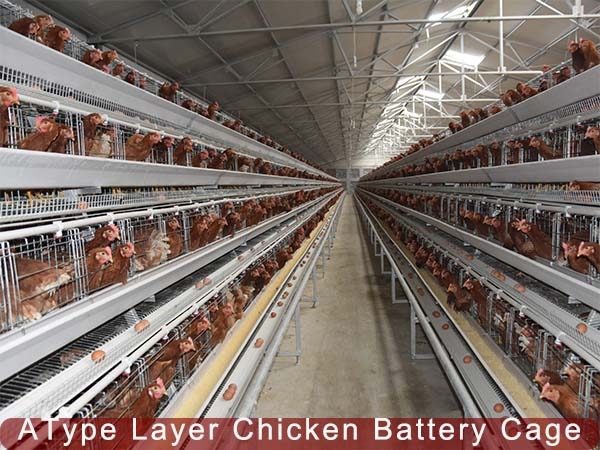
The customer selected four-tier A-type layer cages for the 21,600-layer project. Their stepped structure keeps the cage fronts open and gives farm staff convenient access to the birds and equipment during everyday work.
Workers can see the hens, feed troughs, nipple drinkers and egg area directly from the aisle. This makes routine inspection and bird handling straightforward.
The open A-frame allows air to move between the cage tiers, making it practical for poultry houses that rely on natural ventilation or a combination of natural and mechanical airflow.
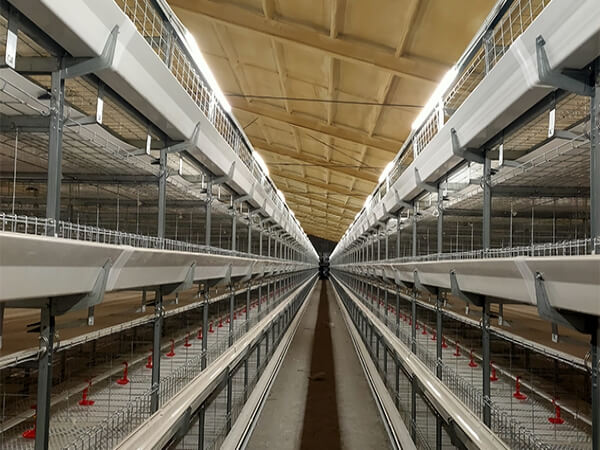
Every cage section has a fixed feed trough and nipple-drinking position, giving the hens regular access to feed and water along the complete cage row.
The sloped cage floor guides eggs toward the front collection area, while manure falls below the cages and remains separate from the hens and collected eggs.
The four-tier model also provides more cage capacity than a lower A-frame while keeping the main operating points accessible. With 160 birds per set, the 135 cage sets give the Ghana farm a clearly calculated capacity of 21,600 laying hens.
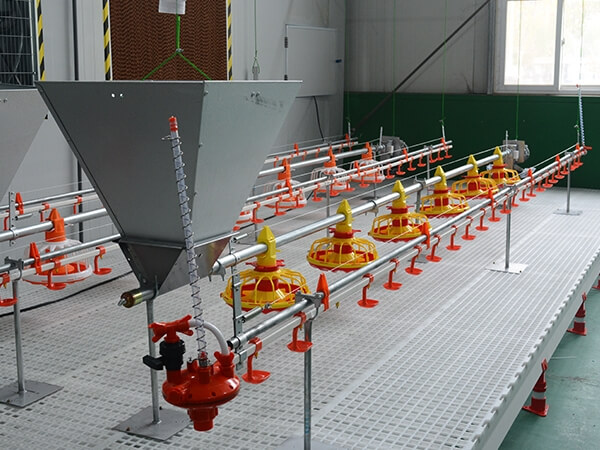
The automatic feeding machine is the main supporting equipment in this shipment. It travels along the A-frame cage rows and distributes feed into the troughs at each tier. This removes the need for workers to carry and portion feed repeatedly along all 135 cage sets.
Mechanical feeding is particularly useful at the 21,600-bird scale. The operator can fill the machine, run it along the cage line and check the feed level at several points. A consistent route makes feeding time easier to organize and helps prevent one section from receiving noticeably more feed than another.
The A-frame stays open for bird inspection, routine maintenance and egg handling. Workers can reach the cage fronts without entering a narrow stacked-cage service space.
The automatic feeding machine replaces repeated hand distribution along the cage rows, reducing the heaviest and most repetitive part of daily feeding.
The cage frames, mesh panels, trough sections and connecting parts were checked and grouped for shipment. Components of the automatic feeding machine were packed with their related fittings so they can be identified when the containers arrive in Ghana.
Because an A-type project includes many similar cage parts, clear package marks help the installation team separate the materials by row. The farm can prepare a dry unloading area and place structural parts close to the poultry house before assembly starts.
During shipping, the customer can complete the house floor, cage-row positions, water supply and electrical route for the automatic feeding machine. The feeder also needs a clear travel path beside the cages, so aisle width and row-end turning space should follow the confirmed layout.
The combination of A-type cages and an automatic feeding machine is well suited to farms that want to reduce manual feed handling while keeping other daily work straightforward. It can be used for a new poultry house or an existing building when the internal width, length and height allow the required cage rows and working aisles.
Before calculating equipment quantities, the farm should confirm:
These details allow LIVI to arrange the cage rows and feeding route around the actual poultry house rather than supplying a cage quantity without a workable installation plan.
Send your planned capacity and poultry-house dimensions for a cage layout and automatic feeding equipment quotation.
WhatsApp: +86 131 0741 2960 Submit Project Details