Welcome To Zhengzhou Livi Machinery Manufacturing Co., Ltd
E-mail:poultry@livichickencage.com


| Project location | Nigeria |
|---|---|
| Bird type | Commercial laying hens |
| Planned capacity | Approximately 20,000 layers |
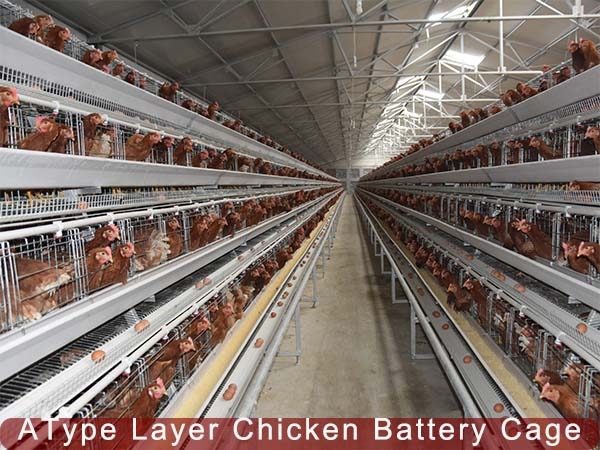
| Cage system | A-type layer battery cage system |
| Recorded cage capacity | 120 birds per cage set, with approximately 495 cm² of cage floor area per bird |
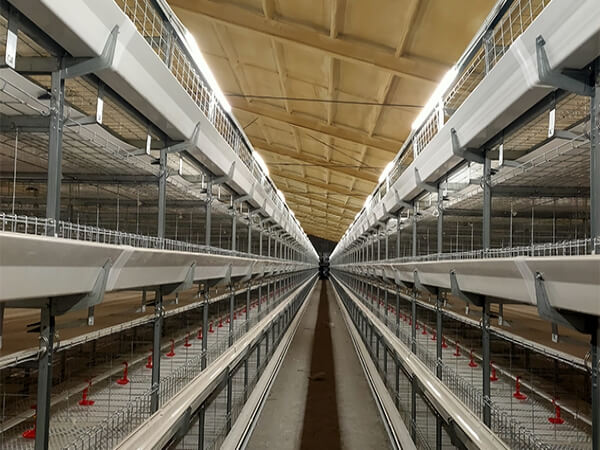
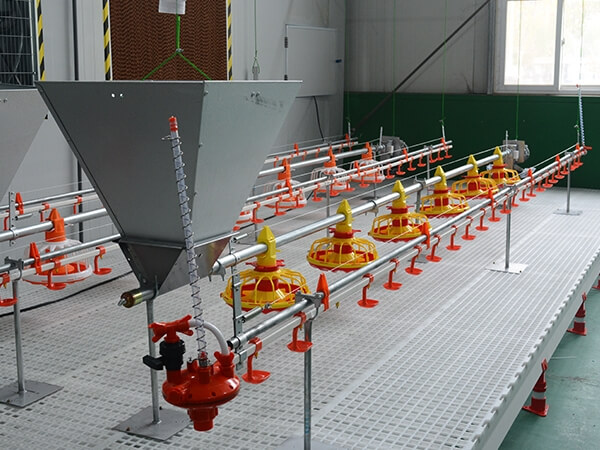
| Supporting equipment | Automatic feeding machine and scraper manure removal system |
| Project status | Installed and placed into operation |
An A-type cage arranges the cage tiers in a stepped structure. Compared with a fully stacked cage layout, its open form provides straightforward access for inspection, bird handling and routine maintenance. This makes it a practical option for a medium-sized poultry farm that wants to improve feeding and manure handling without making every process fully automatic.
For this 20,000-layer project, the A-frame arrangement also supports natural air movement around the cages—an important planning consideration for poultry houses operating in Nigeria's warm conditions. Final row spacing, cage tiers and equipment passages must still be matched to the actual poultry house dimensions and ventilation design.
The feeding machine distributes feed along the cage rows, helping staff provide feed more consistently and reducing repeated manual transport inside the poultry house. Correct adjustment remains important to control feed distribution and avoid unnecessary spillage.
The scraper system moves manure out of the cage area at scheduled intervals. Regular operation helps keep passages cleaner and reduces prolonged manure accumulation, but cleaning frequency should be adjusted to flock age, moisture and local house conditions.
Each A-type layer cage set in this project accommodates 120 laying hens and provides approximately 495 cm² of cage floor space per bird. The appropriate stocking space allows the hens to stand, feed, drink and move comfortably within the cage, helping reduce crowding and competition within the flock.
With sufficient access to feed and drinking water, the birds can maintain more consistent daily activity and feeding behavior. The open A-type cage structure also allows better airflow around the flock, creating a cleaner and more comfortable environment for healthy layer growth and stable egg production.
The selected cage components use galvanized steel to improve corrosion resistance. With a suitable galvanizing specification, proper manure management, controlled house moisture and regular maintenance, this type of cage system is designed for long-term use and may reach a service life of up to 20 years under appropriate operating conditions. Actual service life varies with coating quality, humidity, cleaning chemicals and daily farm management.
To prepare a practical layout and quotation for battery cages for layers in Nigeria, provide the following project details:
Since 2012, LIVI has supplied poultry cage systems and project configuration support for commercial farms. The recommended layout is prepared around the customer's real building conditions rather than capacity alone.
Yes. An A-type system can suit this scale when the cage rows, passages, ventilation and supporting equipment are correctly matched to the poultry house.
The theoretical quantity depends on the capacity of the selected cage model. The final quantity must be confirmed through a house layout because passages, end clearances and service areas reduce usable space.
Yes. In addition to automatic feeding and scraper manure removal, the project can be configured with drinking, egg collection and environmental-control equipment according to the farm plan and budget.
Send the project country, bird capacity, poultry house dimensions and required equipment. Photos or drawings of an existing house are also helpful.
Send LIVI your planned capacity and poultry house dimensions for an equipment configuration and project quotation.
WhatsApp: +86 131 0741 2960 poultry@livichickencage.com